"Chocolate's Child Slaves" - The CNN Freedom Project
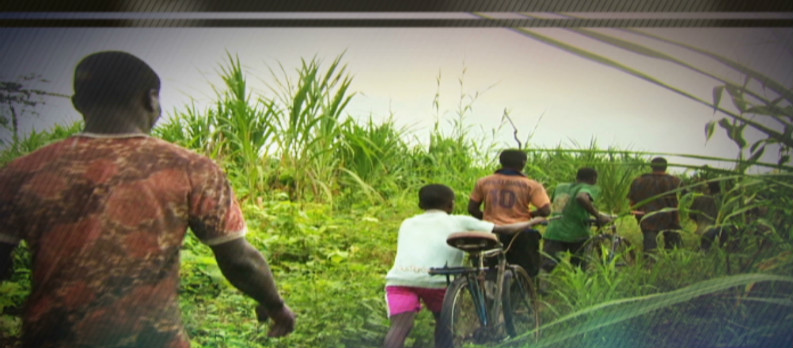
Early last year, CNN started a project that takes a hard look into the reality of slavery in today's world. The CNN Freedom Project: Ending Modern-Day Slavery investigates all types of human trafficking occurring around the world from the sex trade to forced labor. Most recently, it has turned its focus on the issue of child slavery in the cocoa industry. Their recent documentary, "Chocolate's Child Slaves" aired this past Friday, Jan 20th. Below are some clips as well as other CNN videos relating to the topic...
Fair Trade USA recently released a series of micro-documentaries that help bring a better understanding of what Fair Trade is all about and how it helps both people and environment. Take a look...
Fair Trade: Quality Products
"Fair Trade Certified products are some of the highest quality goods available on the market. Farming communities around the world are rapidly realizing that quality-not quantity- is directly related to profitability; leading many Fair Trade cooperatives to invest their premium funds in quality control initiatives. By strengthening their capacity to produce high quality goods these farmers are gaining increased market access, strengthening their business capacity and in turn earning higher wages to support the well being of their families and communities."
Fair Trade: Improving Lives
"Through Fair Trade certification not only do farmers earn a higher price for their goods, they also receive an additional premium fund for community development projects. These funds are used for things like building schools, health care clinics and clean water wells, as well as for home loans, scholarships and transportation. Fair Trade empowers communities to take their futures into their own hands."
Fair Trade: Protecting the Environment
"Fair Trade is not just about earning a higher price for the harvest, it's about learning techniques for sustainable agriculture that help protect the environment and make the world a better place for future generations. To become Fair Trade Certified, farms must adhere to a strict set of environmental standards, including but not limited to: no use of GMO's, minimal and safe use of chemicals, elimination of slash and burn techniques and responsible disposal of waste and water runoff. These standards not only ensure sustainable production practices, but also worker health and safety.
Additionally, while Fair Trade does not require organic certification, it does encourage organic conversion to further enhance environmental commitment."
Fair Trade: Power of the Consumer
"Fair Trade is a system that harnesses the power of the market to help alleviate poverty and generate significant global change; this is why the American consumer has so much power. By making small, simple changes to your everyday purchasing habits, such as choosing a cup of Fair Trade coffee or eating a Fair Trade banana, shoppers are able to vote with their dollar for a better world."
"Chocolate - The Bitter Truth 1 of 5 - Ivory Coast Child Trafficking - BBC Panorama Investigation, recorded 08.05.2010 We spend more on chocolate each year than investors spend on gold - but as Easter approaches, how much do we really know about where it comes from or how it is made?
Panorama reporter Paul Kenyon goes undercover as a cocoa trader in West Africa and discovers children as young as seven working long hours on cocoa farms, helping to make the chocolate we love so much. He buys a tonne of cocoa made with child labour, and sees how easy it is to sell it into the supply chain which leads to our high streets.
He also helps rescue a 12-year-old boy - trafficked across borders - to pick cocoa as a modern-day slave and reunites him with his mother. For the first time, we meet the kids who harvest our cocoa but who have never tasted chocolate.
Tracing the bitter truth of chocolate and child labour, Panorama reporter Paul Kenyon poses as a cocoa dealer to uncover the extent of child labour in the chocolate trade.
"In the isolated hill towns of the Dominican Republic, cacao farmers have been fighting a losing battle with the global economy (and hundreds of opportunistic middlemen) for as long as anyone can remember. “Chocolate Country” is the story of a village with a plan to turn the system on its head. Like many poor farmers, the people of Loma Guacanejo have never been able to afford herbicides or pesticides. Shifting demands in the first world are about to turn this disadvantage into an advantage. If the farmers can certify their cocoa beans “organic”, and leverage the benefits of "Fair Trade", their product could instantly double - even triple - in value...
What the Loma Guacanejo cooperative is fighting for amounts to a win-win situation for consumers and growers. For consumers, it provides an alternative to the unsanitary and unappetizing conditions of conventional production, where cacao is dried on roadside tarps and exposed to rain, mold, car exhaust and wandering livestock. For growers, it promises a fairer, more direct relationship with the marketplace, and a better income for households where running water is still a rarity and electricity a far-off dream."
"Fair Trade Certification empowers farmers and farm workers to lift themselves out of poverty by investing in their farms and communities, protecting the environment, and developing the business skills necessary to compete in the global marketplace."
"What's the true price of love? Current Vanguard Journalists head to Colombia and Sierra Leone to explore the unromantic stories behind two symbols of love."
Reasons why we should all look for Fair Trade in flowers and diamonds - see www.TransfairUSA.org (the Fair Trade certifying agency here in the US).
Although all of us are now beginning to realize and feel the impact of our actions on the world around us, it is our children and grandchildren that will have to truly bear the consequences of our actions. Well, these kids are speaking up!!